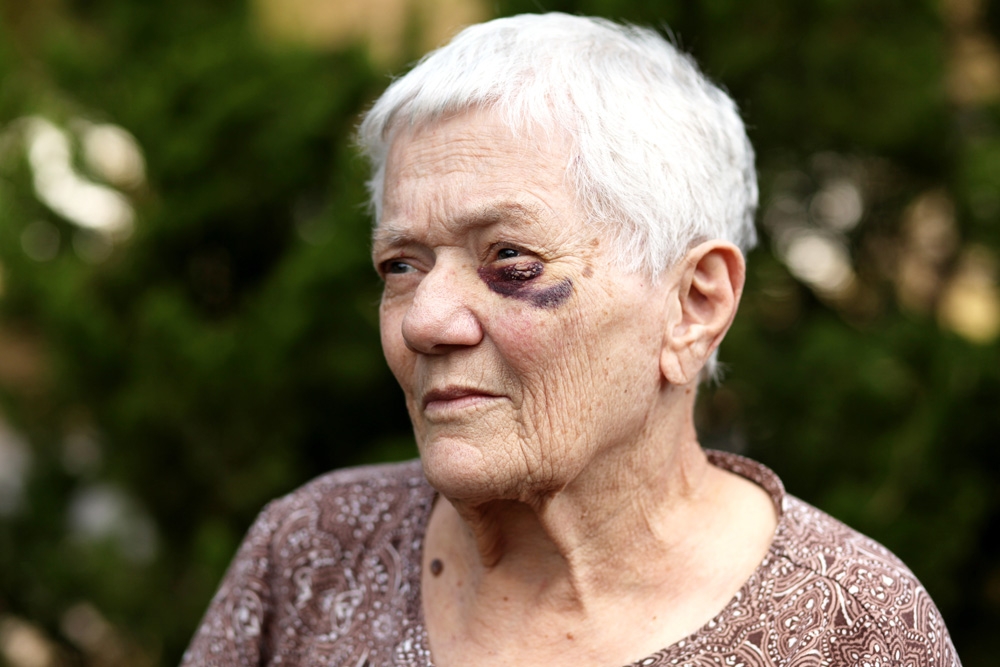

In a perfect world, there would be zero instances of elder abuse.
Unfortunately, we’re not there yet. Recent campaigns in both awareness and professional training have taken things in the right direction, but it’s still a far too common occurrence. According to the New England Journal of Medicine, roughly 10% of elders have been abused in some manner.
The New York State Elder Abuse Prevalence study of 2014 uncovered a rate of 76 cases of abuse (financial and/or non-financial) for every 1000 residents.
We must do better. The guilty parties must be held accountable in every way possible. Criminally, financially, and professionally.
It’s predicted that there will be 98 million Americans over the age of 65 by 2060, and roughly 19 million of them will be 85 or older. People are living longer, and need our protection and assistance more than ever.
And that brings us back to elder abuse in the state of New York. With the third largest elder population in the country, the number of cases is very large each year. If you or a loved one have been the victim of elder abuse – sexual, financial, physical, emotional, or otherwise – you need to act quickly to protect your rights. You may be eligible for financial compensation. While it does not undo pain and suffering, it does provide the means to remedy the situation if possible. To provide for your ailing loved one. To hold the abusers responsible.
But you have to act within the statute of limitations.
A statute of limitation is a set length of time after an incident during which legal proceedings may be initiated. The statute of limitation varies depending on the nature of the crime or incident and the state in which it happened.
In the state of New York, the statute of limitations for a felony – a crime in which the punishment may be death or imprisonment over one year – is generally three to six years. A misdemeanor – punishable by a fine and/or up to a year in prison – must typically be brought within one or two years. First-degree crimes such as murder have no limitation.
Civil lawsuits pertaining to elder abuse or neglect in the state of New York have the following statutes of limitation in place:
- Assault and battery – 1 year
- Emotional distress, intentional – 1 years
- Emotional distress, negligent – 3 years
- Medical malpractice – 2 years and six months
- Personal injury – 3 years
- Wrongful death – 2 years
- Theft – 2-5 years depending on the particulars
If the statute of limitation has expired a lawsuit may not be filed, or if filed it may be dismissed. To complicate matters even further, the “discovery rule” states that the statute of limitation does not commence until the action has been discovered in cases where the abuse may not be immediately evident. Examples include misdiagnosis or mismanagement of finances, both of which may not be uncovered until years later.
If you have been a victim, or suspect abuse or neglect, contact the authorities. All reports are investigated by The New York State Department of Health, Nursing Homes, and ICF/IID Surveillance. Complaints can be submitted via online form or by calling the 24-hour hotline at 1-888-201-4563. You may also reach Adult Protective Services (APS) at 1-844-697-3505.
Next, consider contacting the experienced attorneys at Duffy & Duffy. They can help you navigate the complex legal procedures, evaluate whether you have a civil suit, and clarify whether the statute has expired, or if you qualify for the discovery rule exemption.
Everyone has the right to stay safe from harm – physical, mental, or sexual. And you have the right to justice should that right be violated. For you. For your loved ones.